In the streets of Marseille, young people explore history and build social cohesion through the PRADO Project
Carried out by the Interministerial Delegation for the Fight Against Racism, Antisemitism, and Anti-LGBT Hatred (DILCRAH), the National Action Plan against Racism, Antisemitism, and Origin-Based Discrimination (PRADO) is one of the French government’s key instruments for strengthening prevention efforts among young people. Its ambition is to position education as a practical tool for transmission, critical reflection, and civic engagement, drawing in particular on sites of memory, cultural heritage, and local actors.
The second phase of the plan, presented in July, reaffirms this commitment by promoting educational pathways that help students better understand the mechanisms behind racism, antisemitism, and discrimination, while encouraging dialogue and critical thinking.
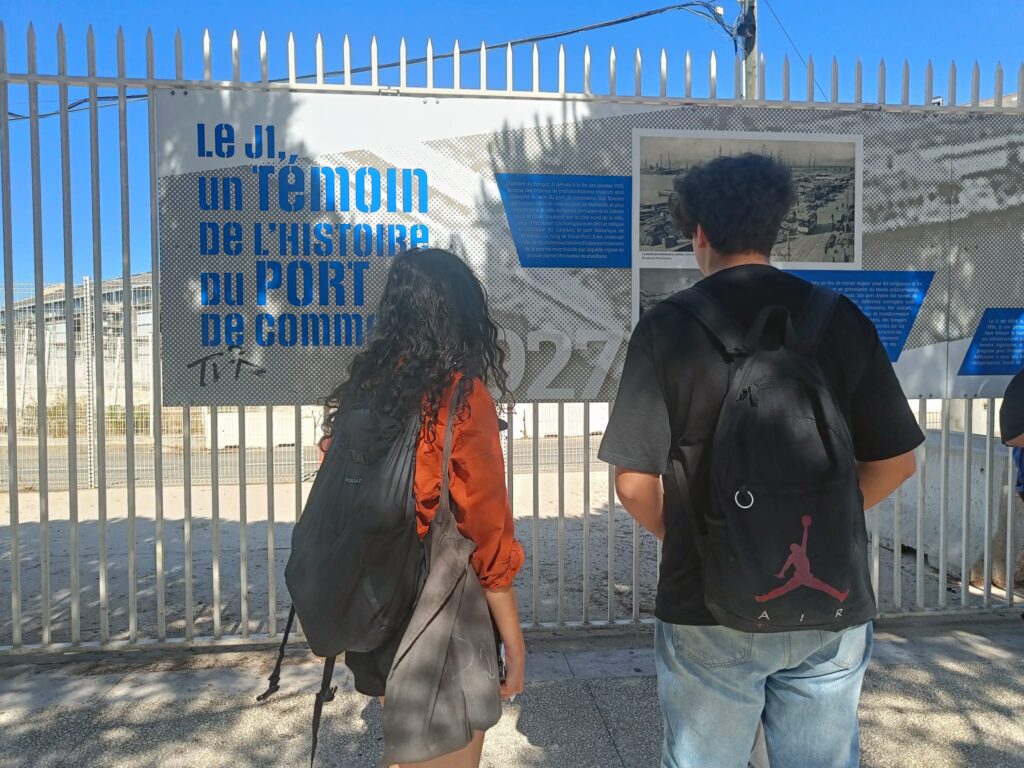
A long-standing partner of DILCRAH, The Beit Project is fully aligned with this approach through the PRADO initiative—an adaptation of its “Nomadic School of Living Together” program. Designed as a one-day experience, the project invites middle school students to explore their immediate surroundings, investigate traces of history in public spaces, and engage in collective discussions on the major social issues shaping their communities.
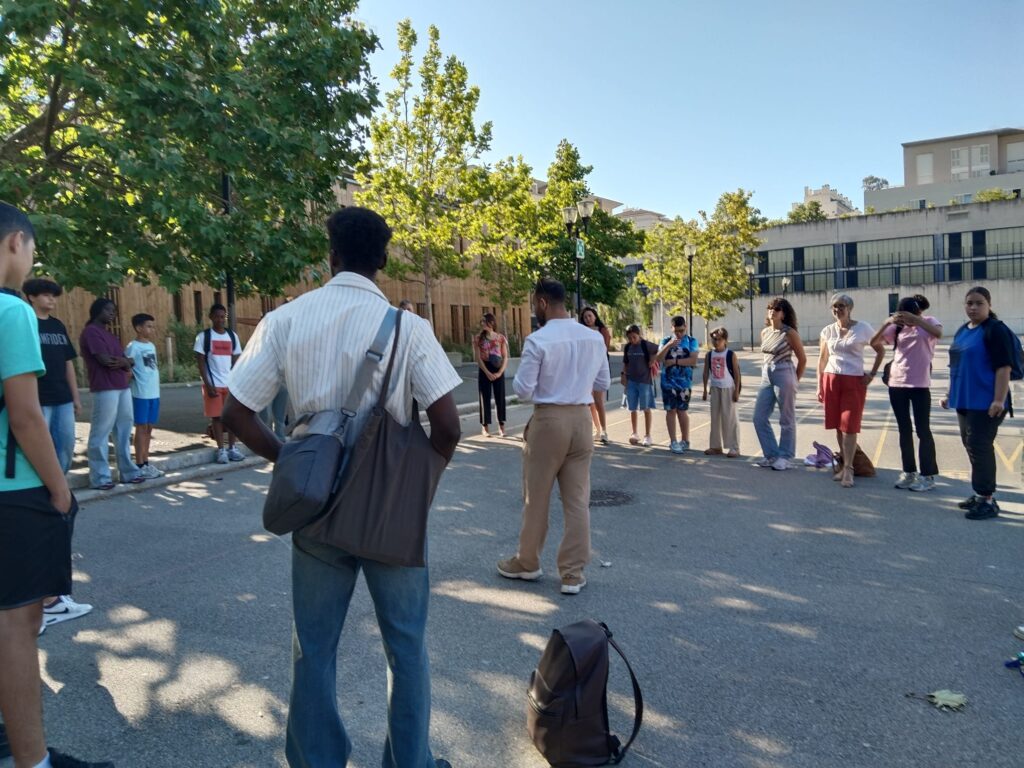
PRADO sessions in Marseille took place from June 15 to 19 in the Euroméditerranée district. In total, more than 130 students from the Jacques Chirac International School Campus, Rosa Parks, Jean-Claude Izzo, and Notre-Dame de la Major middle schools took part in a day of urban exploration, discovering traces of the past embedded in their everyday surroundings.
Guided by a dedicated and attentive facilitation team, the students moved through the neighborhood while engaging in a collective reflection on issues related to racism, antisemitism, and origin-based discrimination. This immersion in the urban environment sparked rich lines of inquiry and fostered particularly constructive discussions.
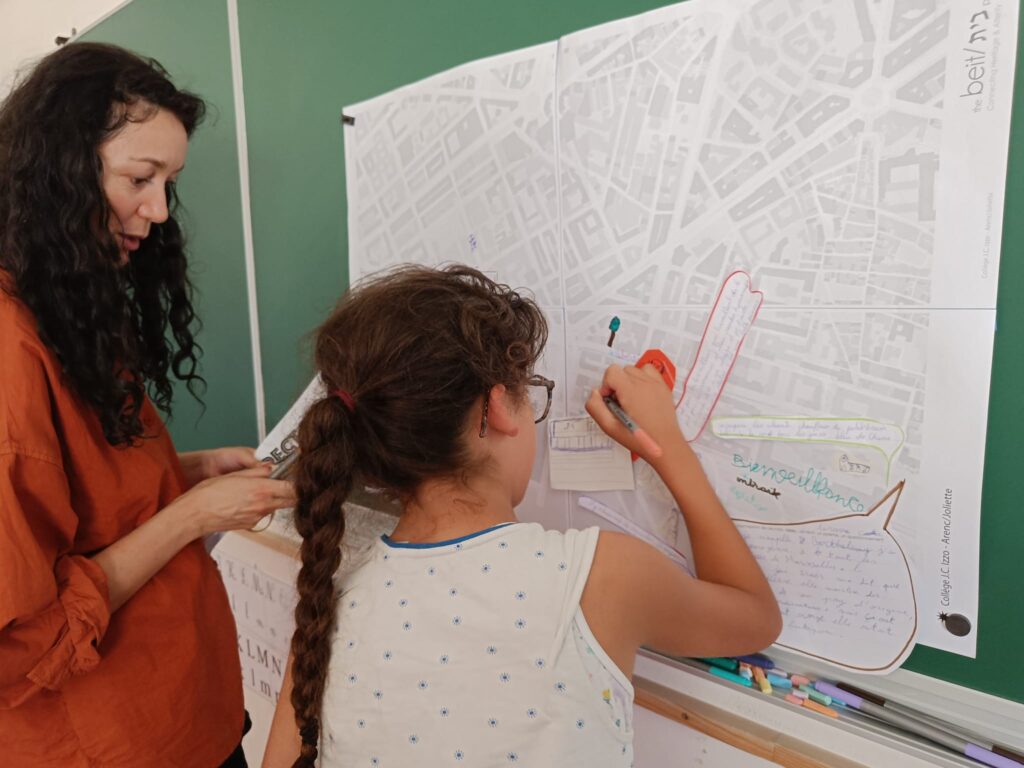
Following high-quality debates, participants worked in small groups to create “sensitive maps” capturing their observations, reflections, and impressions from the day. These outputs highlight their ability to engage with the explored sites and themes through a lens that is at once critical, personal, and civic-minded.
Thanks to our partners for making this project possible:
The Beit Project
Creating Consciousness Urban Heritage and European Plurality
Share the experience!
Thank you for your interest, leave us your contact details here and we will contact you shortly.