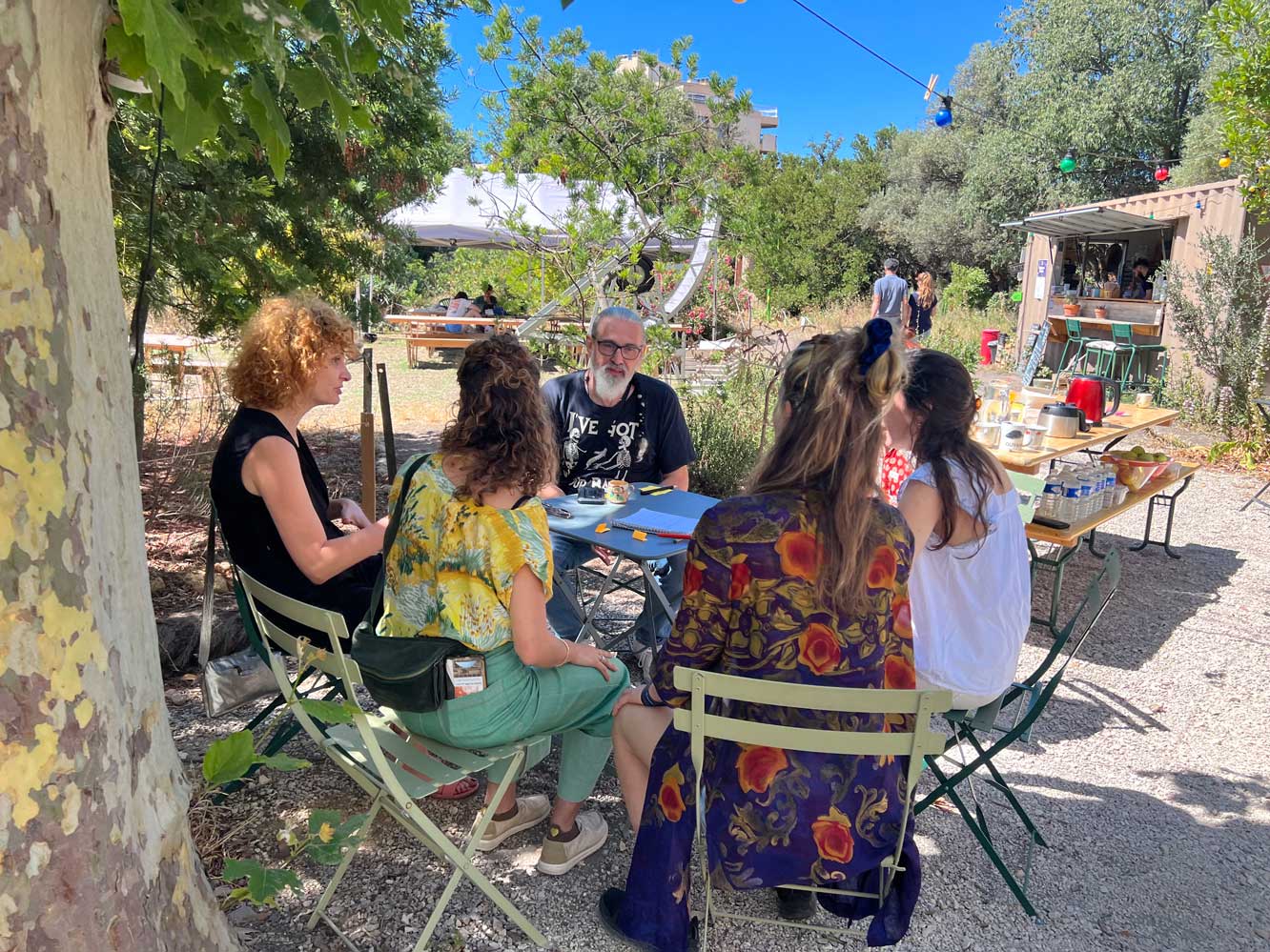
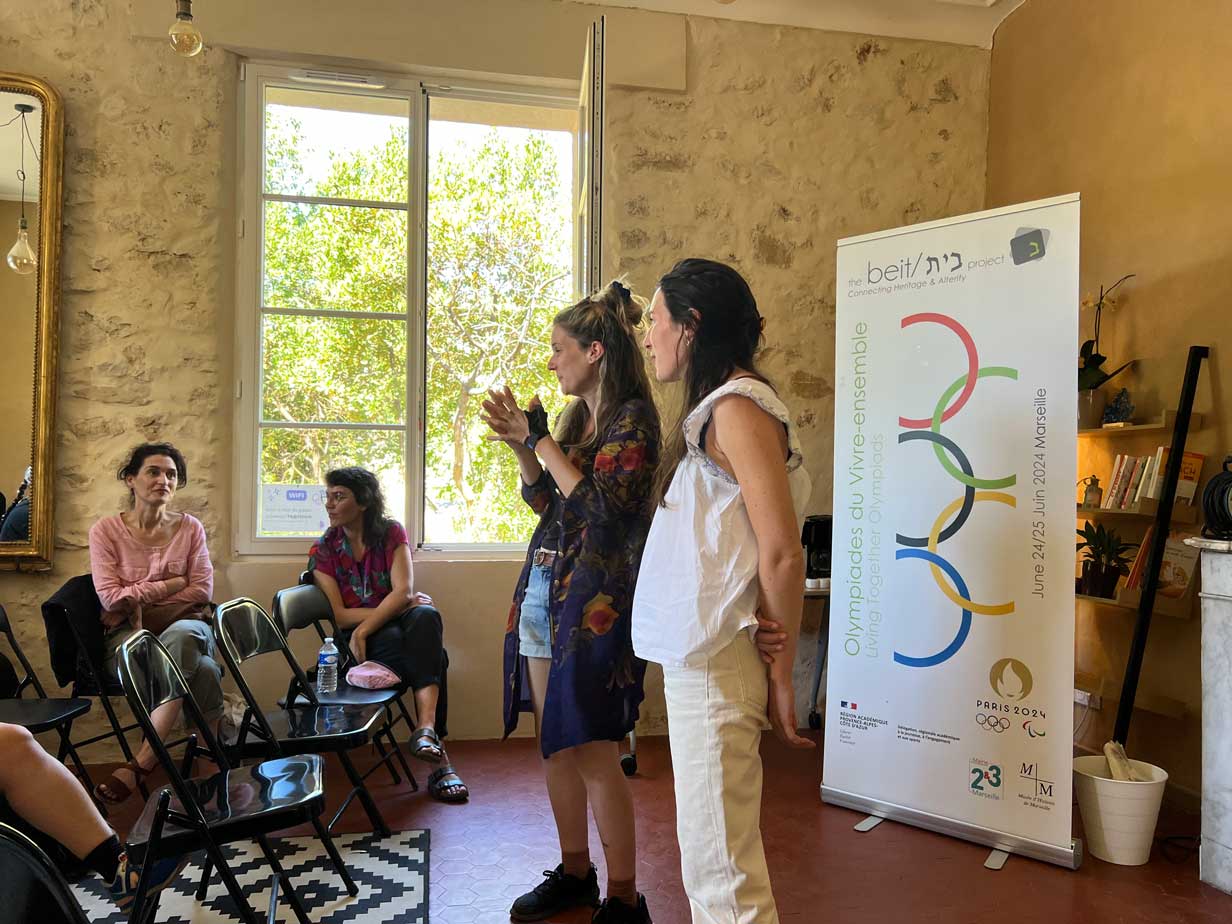
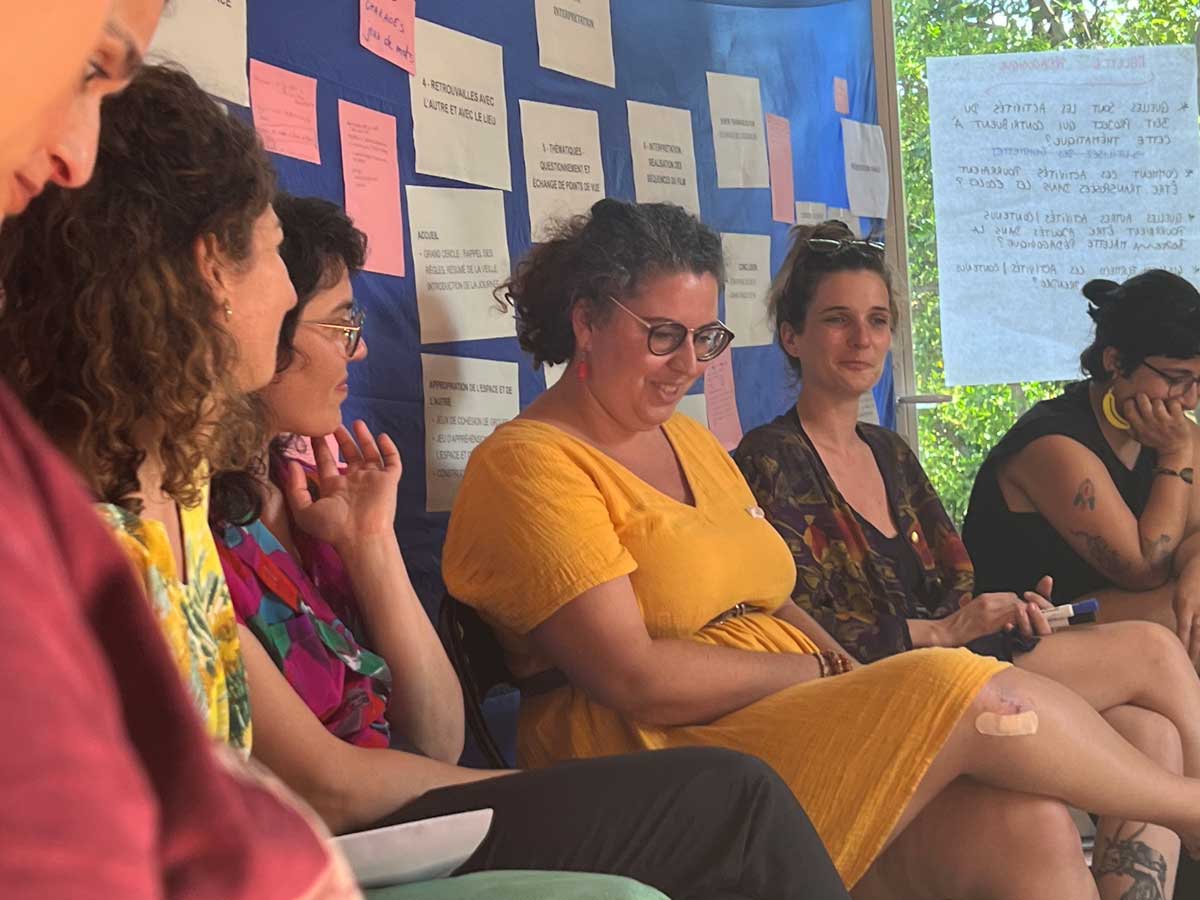
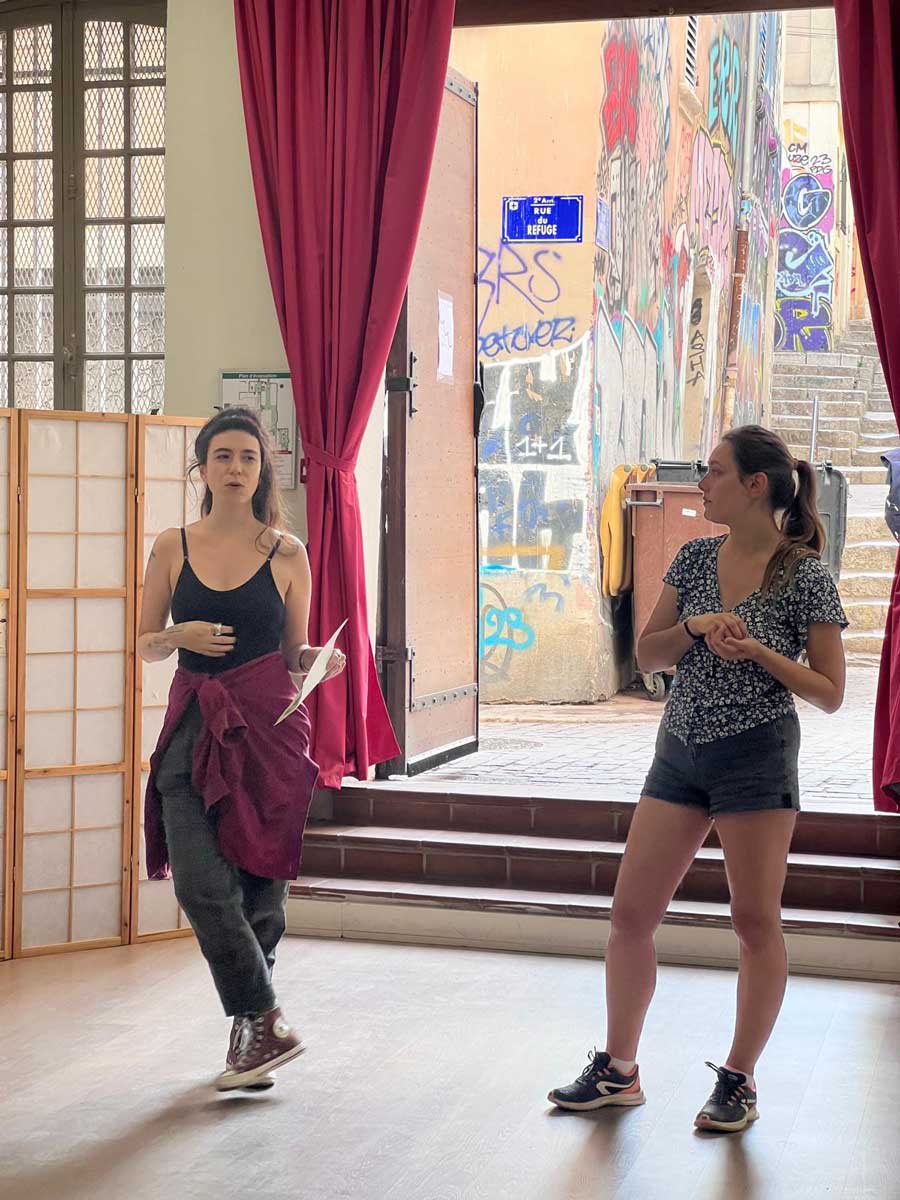
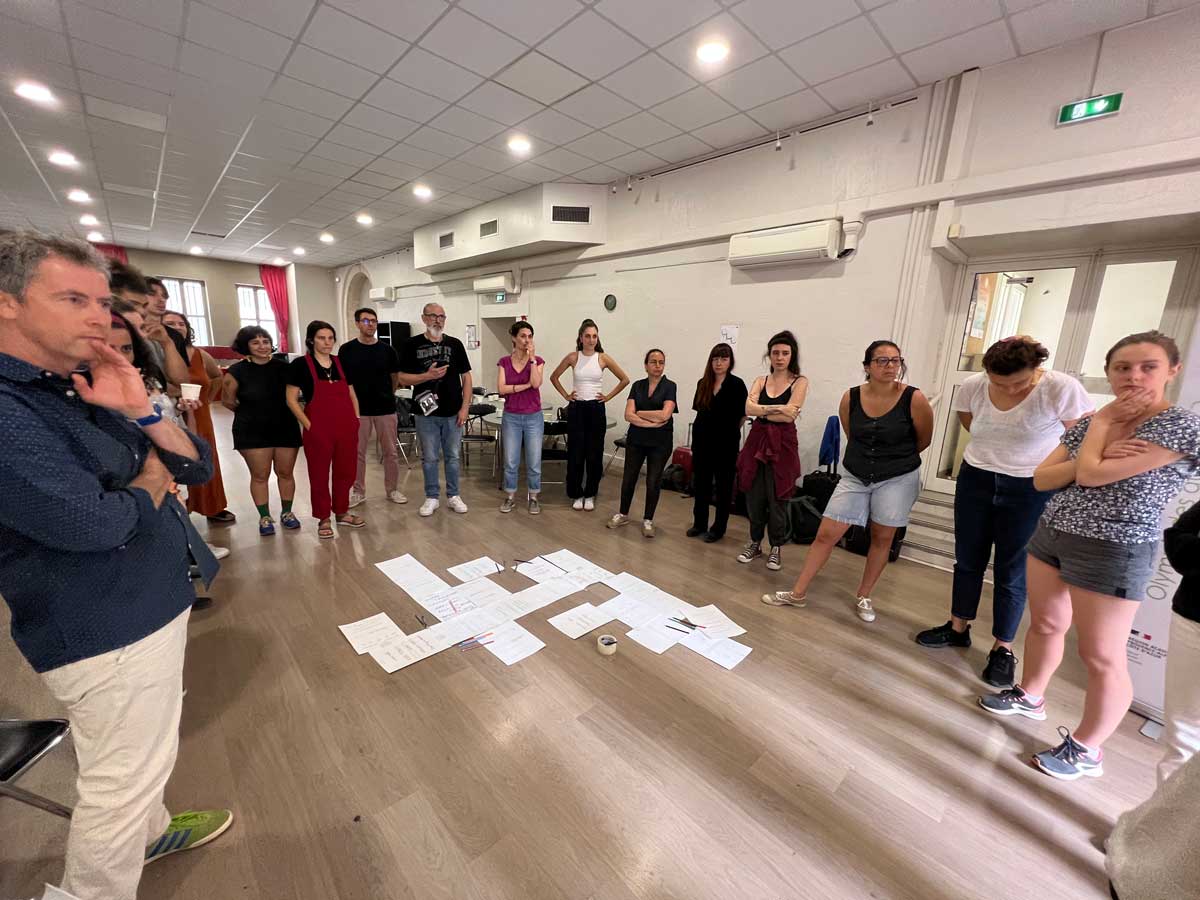
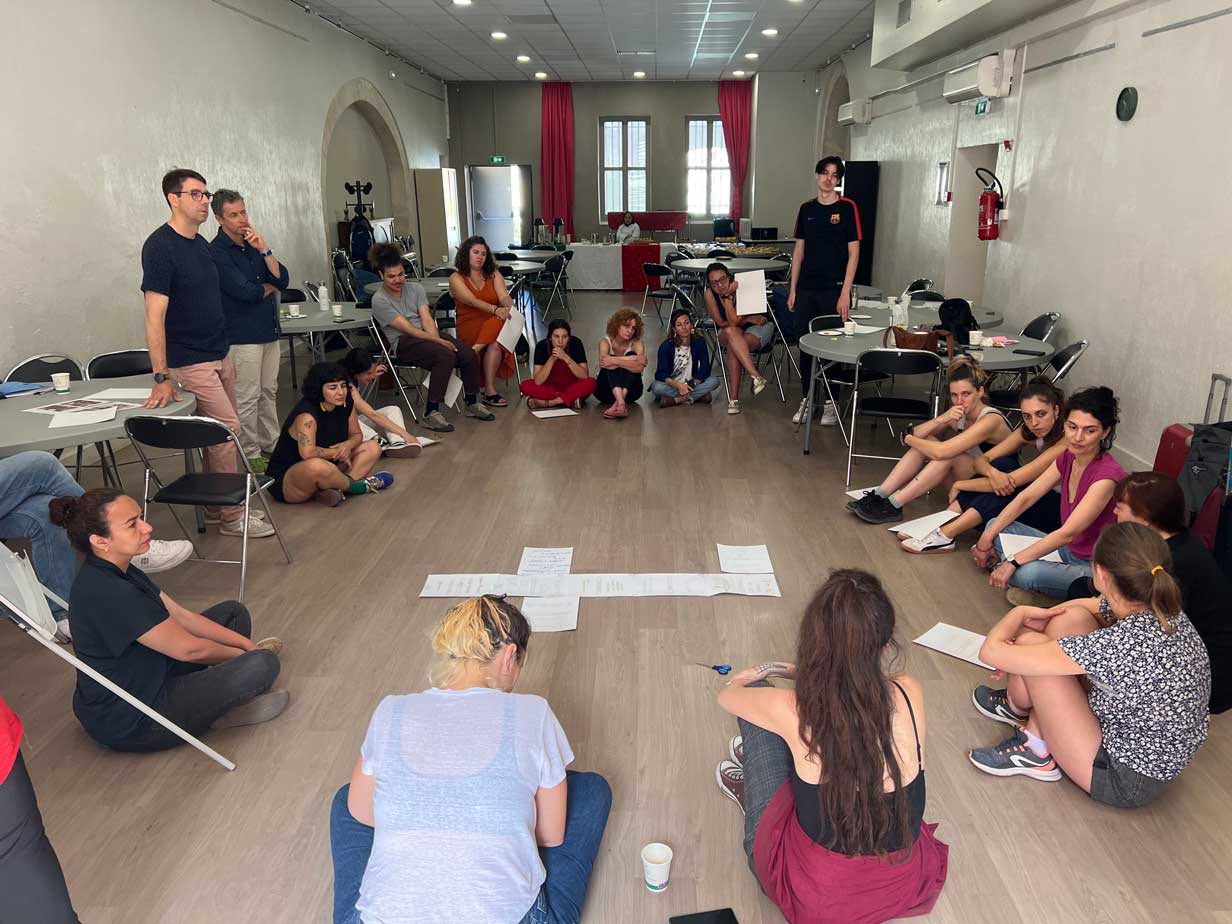
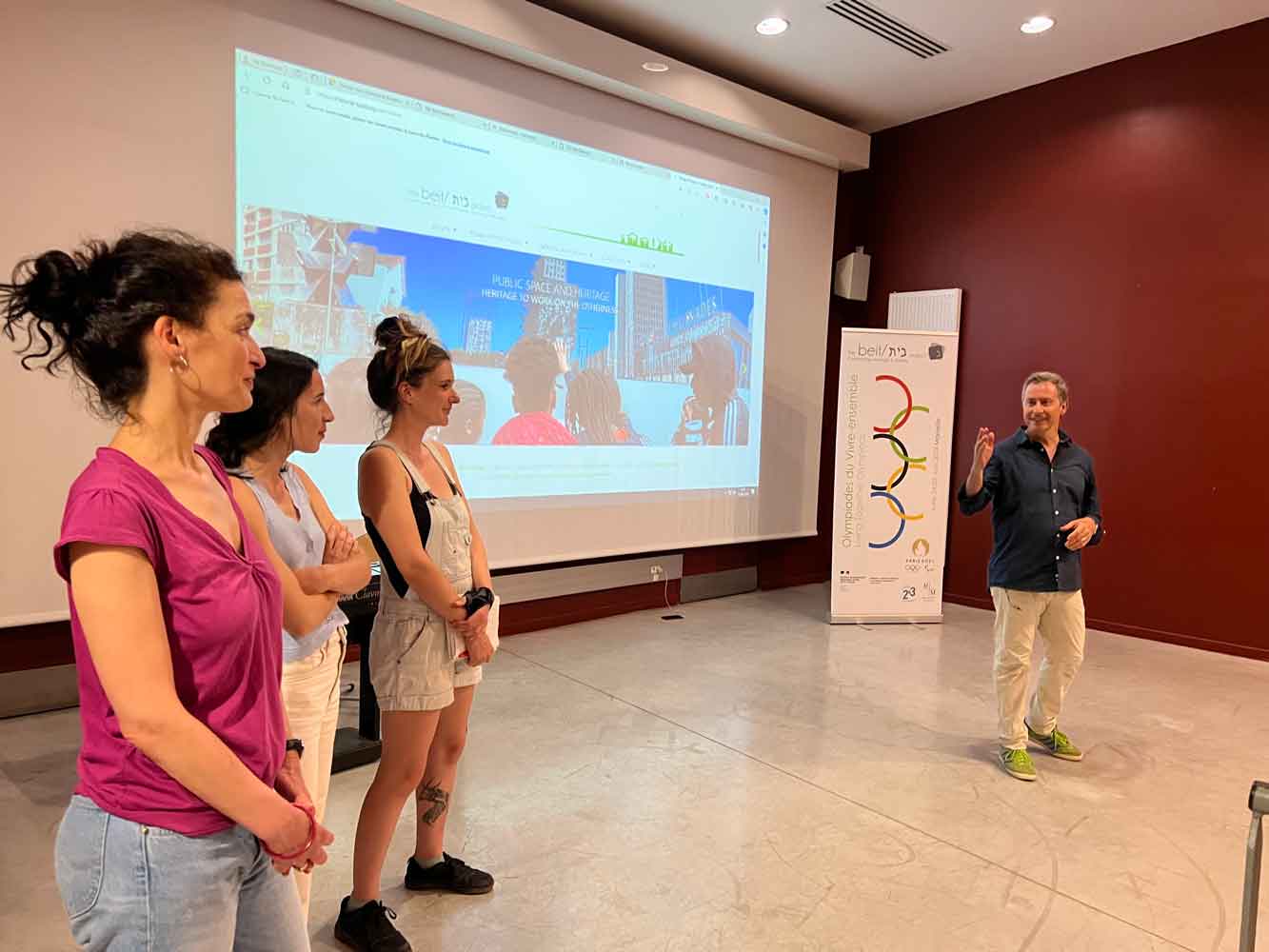
Beautiful moments of team meetings for the project, bringing together participants from Lodz, Timișoara, Brussels, Paris, Nantes, Marseille, Sarcelles, and Barcelona, took place over two days. They exchanged ideas, worked together on the future of the project, its improvement, the amplification of its impact, and deepening the key concepts crucial to its mission.
These activities were held across several locations in Marseille, with the goal of fostering encounters, exchanges, collaborative work, and reflections on the values of living together (particularly in sports, hence the name Olympiads). The creation of a future educational toolkit was also a major focus, aiming to spread the values of living together more broadly, especially within schools, drawing on the experiences of students who participated in The Beit Project’s urban sessions.
To enrich these discussions, various interventions took place over the two days, such as peer learning*, brainstorming on how to connect the project cities through dominoes**, testing ideas at Fraissinet College***, and addressing challenges faced throughout the year.
Informal moments, such as ice-breaker games, shared meals, a visit to the Marseille History Museum, and its temporary exhibition on “Marseille and Sports: Bodies and Histories in Motion,” added a lighter touch to the activities.
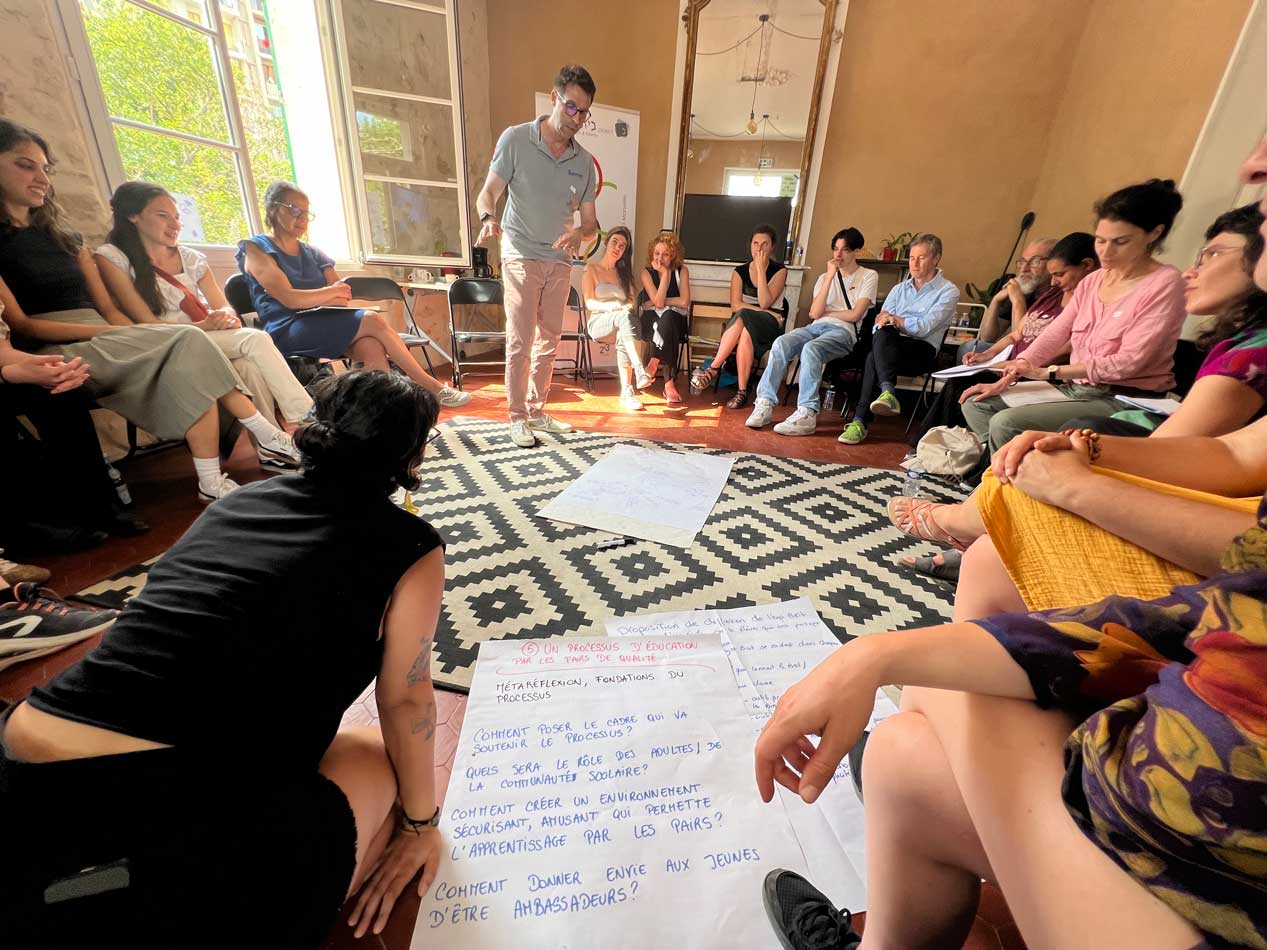
WORKSHOP 1: Peer Learning
Peer learning is a teaching technique that promotes collaboration and teamwork to acquire knowledge. In this approach, learners, using a concept and various pieces of information, are tasked with solving a problem without the intervention of a teacher. This horizontal form of teaching has a powerful multiplying effect. The environment, as well as engagement and participation, play crucial roles. It’s essential to foster a dynamic of involvement, where seeing their peers take action motivates others to begin collaborating.
This day of activities took place at LICA – the Laboratory of Collective and Artificial Intelligence, a peaceful green oasis in the heart of the city, serving as a collaborative space for the development of collective, inclusive, and sustainable projects.
WORKSHOP 2: Connecting the Project Cities
Domino-Carto-Exquisite: If there is one universal game, it’s dominoes. This idea of Domino-Carto-Exquisite guided the development of this workshop, aiming to create links between cities by establishing both obvious and unexpected connections that inspire new reflections and interpretations situated precisely at the intersections. In this game, communication and understanding of others serve as the means for a common construction. Urban and social phenomena are discussed based on our experiences of city life. This activity culminates in a moment of creative expression that transcends words and concepts; gestures and images come to the forefront. This provides valuable material to continue designing the educational toolkit.
The morning activity took place at CAL (Centre d’Animation et des Loisirs) in the Panier district.
WORKSHOP 3: Intervention at Collège Fraissinet
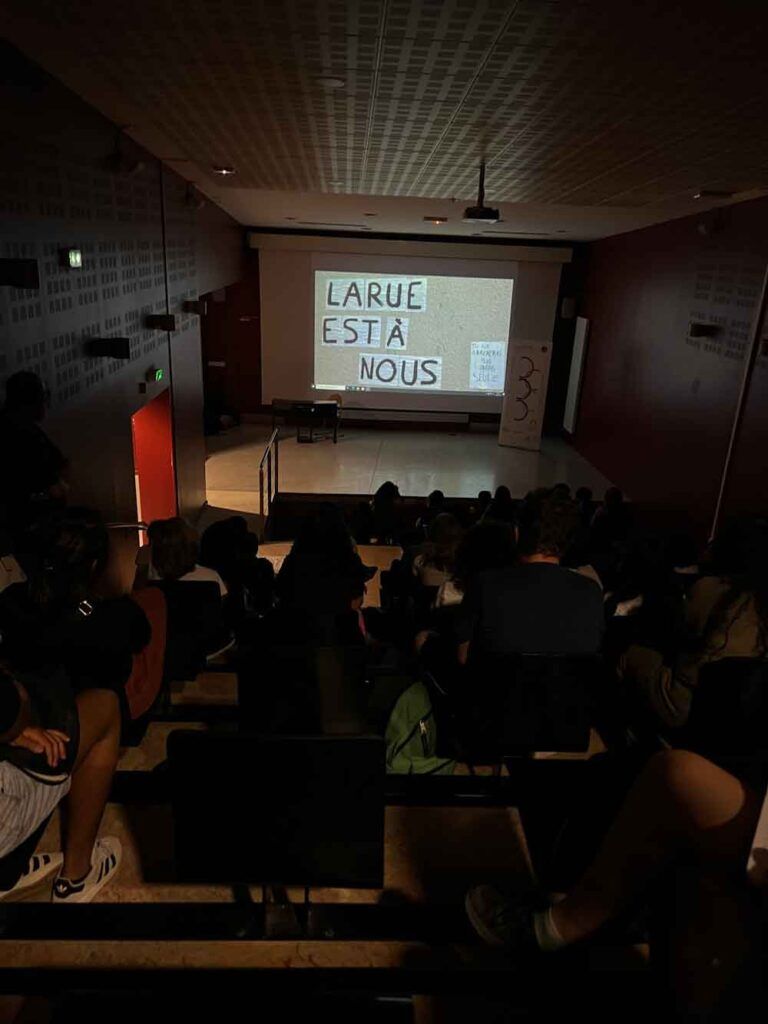
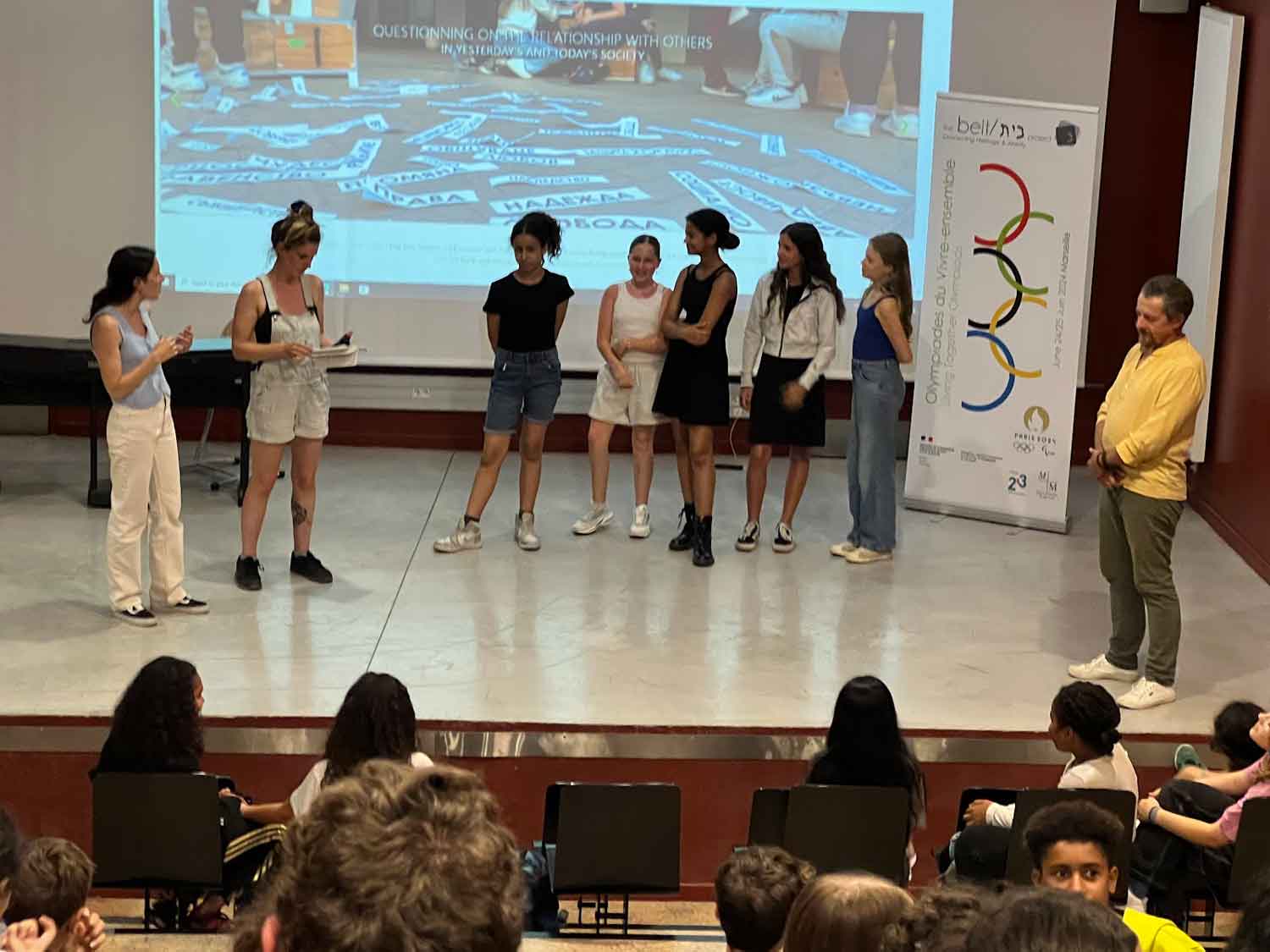
In the last afternoon, a group relocated to Collège Fraissinet to meet with three 5th-grade classes, one of which had participated in the urban project in March. A screening of their films sparked debates on topics such as feminism and the right to housing—rich discussions that highlighted the engagement of the young people who easily embraced the subjects of their films. The students who were unfamiliar with the project showed great curiosity, asking many questions about the project and the themes discussed. We realized that the students who participated in the project could become ambassadors for it as long as they were willing and felt confident about the topic and within the group. The concept of the educational toolkit remains somewhat vague, but one student mentioned the idea of peer transmission, emphasizing that it is easier to learn from fellow students thanks to a shared language and common codes, which echoed the peer learning workshop from the previous day. In this context, the involvement of teachers Denis Zappa and Vincent Hedde was crucial, and we sincerely thank them.